Theology

Thoughts on Evolution and Creation

Thankyou to those who have sent in such interesting and thought provoking comments to my last post. Here is my two-cents worth…

The Catholic Church and some varieties of Protestant Churches (non-evangelical ones) have moved officially towards accepting the Theory of Evolution as the process God used to create life on the Earth. I would note that even if this turned out to be true, it would still have no effect whatsoever on either the accuracy of the Bible or on our Christian faith, for as Tony points out, the Old Testament has been interpreted allegorically since the time of Origen in the 3rd century BC.

However, there remain some fatally serious problems with the Theory of Macro Evolution as an explanation for life on earth. Among these are:

1. How did life begin?

2. How can huge chunks of very organised information be spliced into an existing genome by mere chance?

3. How can incredibly complex systems, such as the mammalian eye or the clotting cascade in the blood, evolve gradually when in fact the absence of any one component of that system renders the whole system useless? (This is the basic premise of the “Intelligent Design” movement.)

And there are others. A recent court case in the USA ruled that Intelligent Design was not science. I believe that ruling was flawed, though, since the case was not really about whether ID is science or not, but about whether it should be allowed to be taught in Science classes in schools. Clearly, there is a much deeper political agenda involved in the second form of the question, since there is a strong backlash against the “Christian Right” raging in the US at the moment. Most people saw this as just one more way that the Christian Right was trying to impose its standards on the very government of the land, and fought bitterly because of that reason. I read the judgment (you can google it easily) and it seems to me quite biased, though framed in perfect legalese of course.

Atheists in the US have made quite a fuss over this judgement, which they see as some kind of proof that ID is fantasy. Personally, I would not go to a Judge to tell me whether God created the world. Why should he know anymore about it than anyone else? As someone pointed out to me recently, scientists have no more knowledge of philosophy or the laws of logic than anyone else, yet those like Dawkins present themselves as being authorities on questions of religion, which are not scientific question at all, but philosophical ones.

There are different forms of Creationism, and yes, our Church does not subscribe to the literal form that says the world was created in six 24-hour days about 6,000 years ago. I would firstly note that any dogmatic assertions about the creation are not to be trusted – none of us was there! And the only One who was there did not give us a modern scientific account of events, but an account intended to help us understand who we owe our existence to. Anything beyond the actual words of the Bible is interpretation, and you will find good interpretation and bad interpretation, but it is in the end, on this matter, nothing more than interpretation.

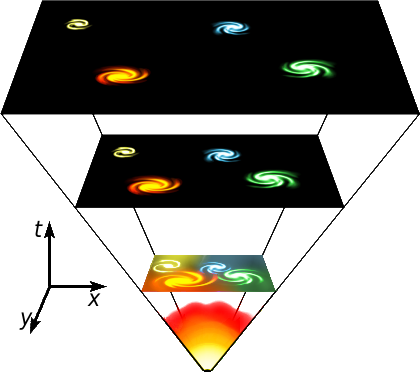
Personally, I have no trouble fitting any current scientific theory into what Genesis tells us. There are some discarded theories that I would have certainly had trouble with, such as the Steady State Theory of the universe, that said that the universe has no beginning and no end, but that it has simply existed forever. This would be in direct contradiction to what Genesis plainly tells us: “In the beginning, God created…” The fact that scientists were literally forced by the facts to accept that the universe did have a beginning (rather than existing forever) is to me one of the greatest vindications of the truth of Genesis and of the Bible as a whole.

All comments welcomed!

Fr Ant

VN:F [1.7.4_987]
Rating: 0.0/10 (0 votes cast)
VN:F [1.7.4_987]
Rating: 0 (from 0 votes)

Skin Story

Helping my son in Year 10 with his Science homework can be a bit of a brain strain for an ageing parent! But he recently pointed something out to me I thought was quite beautiful. It has to do with the way our skin protects us from the dangerous radiation of the sun.

The pigment that gives your skin its colour is a chemical called melanin. The cells in your skin that make melanin are called melanocytes or pigment cells. Built in to this system is a parable of our salvation…

You see, when you are exposed to ultraviolet light, when you spend a day at the beach without sunscreen for example, the ultraviolet radiation damages your skin cells. Especially, it breaks down the DNA inside them, the genetic “machinery” that runs every cell in our bodies. Now DNA is made up of number of smaller molecules, the ‘bricks’ as it were from which it is constructed. When the UV radiation breaks it down, the bricks get scattered about. One of those bricks is a chemical called Thymine (this is different to the vitamin called Thiamine).

There are many things that can stimulate a pigment cell to make more melanin, and guess what? One of them is Thymine! So when the scattered Thymine meets the pigment cell, it switches on the melanin factory, and melanin production is speeded up. This melanin is transported up nearer the surface of the skin where it acts as a shield against UV light (that’s why dark skinned people hardly ever get sunburnt – they have heaps of melanin in their skin). The skin gets darker, you get a suntan, and the rest of the skin cells are protected from the lethal UV radiation.

So in essence, the dying skin cell, the one destroyed by the UV radiation, gave its life in order to save the rest of its fellows from suffering the same fate.

Isn’t that a beautiful parable of the love that Jesus showed us in dying for us that we might not suffer eternal death? Isn’t it a beautiful illustration of the kind of love that the Christian should live every day, sacrificing him/herself for others? And it’s built right into us.

Dare I say … it is a message that really gets under your skin

(sorry)

Fr Ant

VN:F [1.7.4_987]
Rating: 10.0/10 (1 vote cast)
VN:F [1.7.4_987]
Rating: 0 (from 0 votes)

Coptic Women Priests?

I recently came across an interesting book by a pretty conservative Eastern Orthodox theologian on the topic of women in the Orthodox priesthood. You can guess that he was against the idea. What struck me about the book, though, was that some of the arguments he used were totally alien to my understanding of the priesthood.

Especially noticeable was one argument that kept pooping up, whether directly or indirectly, that I might paraphrase as follows:

Priesthood means authority. Authority means control, power, being in charge.
The woman is not fit for this role, since she is the man’s helper, not his boss.
Therefore, we can never have Orthodox women priests.

I’m not sure what you would make of this?

I don’t intend to get into the whole “a helpmate meet for him” argument in this post. It just seemed to me that this argument was weak because it was built on one big mistake: Priesthood is not first and foremost about authority; it is about service.

That this is the teaching of Christ couldn’t be any clearer. He said, “You know that the rulers of the Gentiles lord it over them, and those who are great exercise authority over them. Yet it shall not be so among you; but whoever desires to become great among you, let him be your servant. And whoever desires to be first among you, let him be your slave – just as the Son of Man did not come to be served, but to serve, and to give His life a ransom for many.” (Matthew 20:25-28)

HH Pope Shenouda III wrote in his spiritual classic a chapter entitled “Poor Men” (Al Masakeen, I think). In it, he describes his pity for those who are ordained to the ranks of the priesthood, pointing out that they will be judged not only for their own deeds, but for those of the people whom they serve. Imagine, he says, the poor Pope – who will be held responsible for the fates of millions of souls! Perhaps you can guess he wrote this when he was still a layman, before entering the monastery. Prophetic, though, wasn’t it!

Now that’s the understanding of priesthood (and indeed, any kind of Church position) that I can relate to. The world is all about power and control and advantage and prestige. But those ideas should never be allowed to get in and contaminate the spiritual service. If ever the priest needs to exercise some sort of ‘power’ or ‘authority’ over his flock, it should never be out of a lust to control others, or pride or selfishness. It should be because that is the only avenue left to him to achieve the will of God and the spiritual goals of the Church. It can also only be successful if the people he serves are willingly accepting that authority. Yet it is an authority that any sane man would flee from, for it is very, very dangerous.

What if he makes the wrong decision? What if those he serves suffer because of his orders? There is a great scope for doing damage here! I recently saw a documentary about the Jim Jones tragedy in South America. In short, an American pastor grew gradually more and more manipulative of his flock. Being very charismatic, his influence upon them grew to such an extent that he was able to take 900 of them to a jungle in South America to build a new country, Jonestown, where everything would be perfect. With a frightening array of tools of psychological manipulation, these people virtually became his slaves. Eventually, the whole thing ended with him making them all commit suicide with him. Scary.

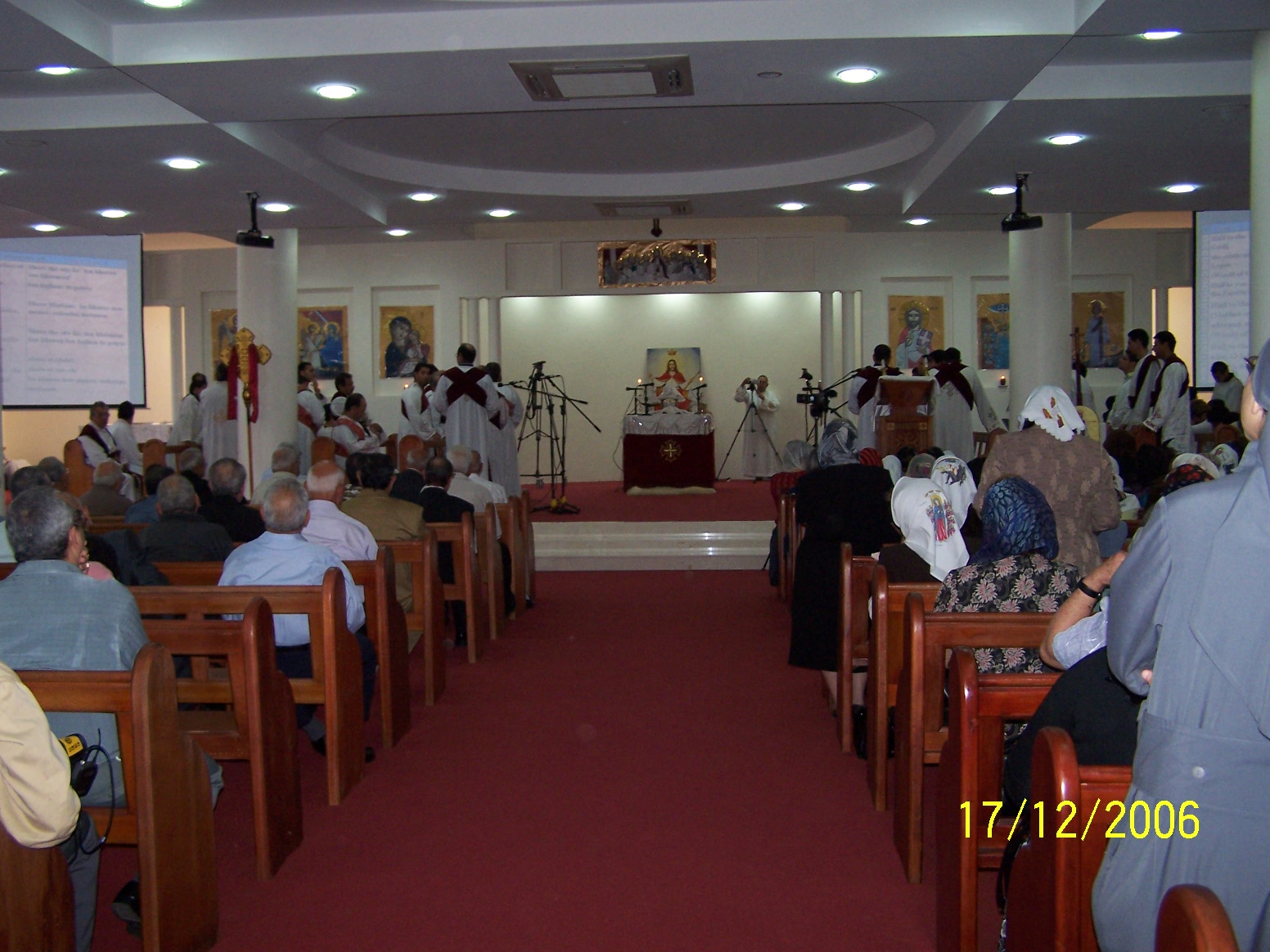
No, religious leadership is about serving. It is about the genuine needs of those being served – not the needs of the servant. Because of this, it is often a very harsh, very difficult path to follow. Which means that any sensible person would run a mile to escape it. If you have ever seen a Coptic bishop being ordained, you will have noticed that he is brought in to Church with two strong bishops holding him firmly by each arm. Although this is largely ceremonial now, its original purpose was to stop the candidate from running away! Pope Shenouda himself repeatedly refused to be ordained as a bishop, until Pope Kyrollos VI virtually forced the matter by one day unexpectedly placing his hand on his head in the corridor, and saying “I ordain you, Shenouda, Bishop in the Orthodox CHurch of God …” There was no escape.

Pope Shenouda is famous for saying “Those who wish to be ordained as priests are usually unsuitable, and those who are suitable, usually do not wish to be ordained”. There is a lot of wisdom in this. Only a person who really understands the responsibility and the sacrifice of priesthood is suitable to be ordained. Yet that is the very person who would run away from it because of that huge responsiblity and sacrifice!

Which seems to me the biggest reason why it is unlikely that we will have women priests in the Coptic Orthodox Church … they are too smart for that :-)

But seriously, I think we are very blessed to have a ‘humble’ attitude to service in the Church. We do not see it as authority, or prestige, or position or power. Priesthood is simply one important service among many others. The Church runs through teamwork, joint effort, not through the efforts of any one individual. There is simply a need for one individual to organise that teamwork, and that happens to be the priest. There is a need for one individual to be set aside for the very scary task of administering the sacraments, and that happens to be the priest. It is a frightening thing to approach an altar with the Body and Blood upon it – frightening because we are sinners, and we are approaching an unimaginably powerful Holiness. But the priest does it because someone has to, and because God has called him to be that someone. No one in their right mind would put themselves forward to do it – only those who don’t quite understand what it really means.

Sadly, in modern life, even Christian Churches have become infected with this idea of power and authority – hence the fight over who is to rule. I hope our Church never loses its innocence. It’s not about anyone ruling.

It’s all about serving.

Fr Ant

VN:F [1.7.4_987]
Rating: 0.0/10 (0 votes cast)
VN:F [1.7.4_987]
Rating: 0 (from 0 votes)