Astute readers who have prayed the Coptic Liturgy of St Basil in English over some years may have noticed that a few words in the liturgy have changed from translation to new translation. One example of this is this prayer from the Litany of the Clergy. See if you can work out which word has given the translators a headache:
“And them that with them rightly divide the word of truth …”
(Marquis de Bute, 1882).
“As well as, those who rightly disclose with them the word of truth …”
(Fr Tadros Y Malaty, 1976)
“And those who rightly define the word of truth with Him …”
(Papal Committee, c. 1990).
“And those who rightly administer with him the word of truth …”
(Prof. Fayek Ishak, 2007).
“And those who rightly handle the word of truth with him …”
(Coptic Reader).
The word translated in Coptic Reader as “handle” is ni-et-shoat evol (nyetswt ebol). The verb construction “shoat evol” means literally to “cut out,” to incise and remove, and hence by extension, it can also mean to “minister” or administer to, or even to “excommunicate.”* But clearly, we are not praying for those who excommunicate the word of truth! The obvious meaning here is those who minister the word of truth to others, but the verb shoat tells us just how this ministry is meant to work.
“Divide,” to the modern mind, perhaps has connotations of splits in the Church and disagreements (“excommunicate!”), which might explain why its appearance in some earlier English translations was replaced by the somewhat less literal translation, “handle.” But there is no need for this substitution if we understand Continue reading “Chewing on Words”
We are one within ourselves, with each other, with the world and with God.
What does it mean to be human? This question has occupied humanity since time immemorial, and of all the different answers we have come up with, I find none so true, so useful or so satisfying as that given by Orthodox Christianity. In Eastern Christianity, there is a powerful push for integration rather than disintegration. It is very easy for the Christian to end up with a life divided into a lot of separate little boxes labelled ‘Work’, ‘Recreation’, ‘Family’, ‘Spirituality’, and so on. So, when I go to church on Sunday, I jump into my Spirituality box. When I finish and go home, I jump out of Spirituality and into, say, the Family box, since of course, these are two very different things. And on Monday, I jump out of Family and into the Work box, a different thing again. This may be our natural tendency, but that is only because we live in a broken and fallen world. Because our world is broken, our lives also tend to be broken. In this state, inconsistencies, internal tensions and hypocrisy are all too easy to fall into.
Instead, we ought to strive to make all these aspects of human life just different faces of the one unified and integrated whole, so that there is no contradiction between any of them, so that I am the same person whichever of them I happen to be engaged in, and so that the presence of God permeates and characterises them all. Instead of having lots of little discreet boxes and jump from one to another, we ought to have just one single box in which we live all our lives, and into which we pour every aspect of that life; the box, labelled ‘Christ’.
This principle of unification applies at every level of our lives. In the Church, lots of different individuals come together. As a Church, we aim to unify all the disparate and unique personalities that we bring into one unified Body of Christ, united in the liturgy by partaking in one voice, one heart and one prayer and in the sharing together and partaking of His one Body and one Blood. No matter how many people there at a Coptic liturgy, there can only be one loaf of bread to be consecrated as Christ’s Body – even if it must be the size of a truck’s wheel – and one cup of wine to be consecrated as Christ’s Blood – even if it must be the size of a large bucket.
As Christians living in this world, we aim to bring harmony and unity to everything in it. We pray for and strive for harmony between families, neighbours, races, religions, genders and even nations. We strive to bring harmony between humanity and its world. Christians understand humanity to be the pinnacle of the creation. That does not mean a selfish rapacious authority whereby the world exists only to fulfil our needs, but Christ-like stewardship and service. We are the servants of this world, of the animals and the birds and fish, and even of the global environment. We have power over the world, but like Christ, we exercise that power to care for the world to do all we can to help it to flourish and grow in beauty. We rejoice in its beauty and its health, and weep over its destruction.
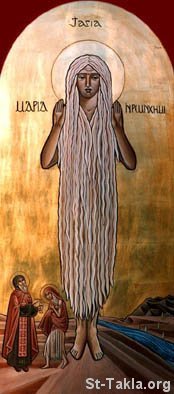
St Mary of Egypt lived a life of extreme asceticism after she repented of her life of extreme dissolution.
In the last post, we spoke of the courage of the Christian, and how that can lead to various kinds of martyrdom. Few of us today will be called upon to display the courage of a martyr, although the world seems to be changing for the worse such that martyrdom is making a comeback in certain regions. In times of persecution, there was another category of people who were deeply respected and venerated: the confessors; those who suffered arrest and torture for their faith but survived their harsh treatment. A confessor is a martyr who lived instead of dying, albeit at the price of great sacrifice.
This spirit of self-sacrificial love lies also at the heart of the way of life that is called ascetism. The word ‘ascetism’ has roots in the Greek for athletic training or preparation for an athletic event. It commonly takes the form of three main practices, fasting, praying and charity. These three practices are grouped together and described in the Sermon on the Mount, Matthew 6:6-18. Orthodox Churches vary in the number and timing of the days they fast each year, but the ancient fasts of Lent and Wednesdays and Fridays are common to most Churches. These are communal fasts, fasted by everyone who is a member of the Church as one body and with one heart, although of course concessions are made for the sick, the elderly, pregnant and nursing mothers and children. The benefit of organised communal fasting, as opposed to the voluntary ‘personal’ fasting preferred by many other Christians, is that it brings the community together in a shared experience. The individual loses herself, sacrificing her own selfish will in order to become a part of something much bigger than herself.
When we fast communally, we can encourage and support each other to achieve the goals of fasting: self-control; gratitude for the food we take for granted; empathy with the poor and hungry of the world and a mindset that rises above the merely material and instead focuses on the transcendent. So long as it is practiced sincerely and with these goals in mind, fasting can be a powerful tool for regenerating both the individual and the community. Of course, like anything else in life, fasting can also be misused and even abused. Christ Himself in the Sermon on the Mount pointed out how it is possible for a person to use the deprivations of fasting to extort sympathy and pity from others or to make oneself a vain ‘spiritual hero’. Thus He advised us to go about our lives when fasting in exactly the same way we go about them when we are not fasting, so that no one might notice the difference and lead us down these undesirable paths. Then there is excessive fasting that leads to a deterioration in health, or ornamental and merely routine fasting; the fasting of the body but not of the spirit, mind or heart. But the misuses of fasting should not make us reject the benefits it brings when it is properly used. It is always regrettable to throw out the baby with the bathwater.
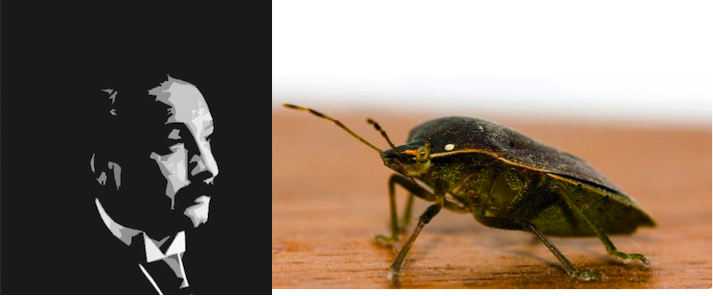
Albert Einstein explains his General Theory of Relativity to Cuthbert the cockroach (see text to make sense of this).
The question of how the Mysteries (sacraments) ‘work’ is necessarily and closely related to the question of the nature of God. If we want to know something about the work of the Holy Spirit, then we need first to know something about the Holy Spirit Himself. But can we ever really understand God? In the West, the Enlightenment was a time when the human mind seemed unstoppable. So many ancient questions were finally resolved, so many dark corners that seemed for centuries to be impenetrable had the light of human intellect flood into them, that it seemed that there was nothing we could not understand. Including perhaps, even God. It is a characteristic of modern Western theology that it sometimes seeks to explain what we of the East accept as inexplicable. Not just unexplained, mind you – in the sense that we just don’t know enough, but one day we might – but genuinely and forever beyond the reach of our human understanding.
But not all the great minds of the Enlightenment were so confident. Seventeenth century French philosopher Rene Descartes famously applied the ‘method of doubt’ to everything in his world and concluded that we cannot be certain that anything truly exists except ourselves (thus was born his famous phrase, cogito ergo sum, roughly translated, “I think, therefore, I am”). While most people rightly consider Descartes’ scepticism impractical, it is important for anyone who really cares about truth to be cautious about what they accept as truth.
In modern times, belief in God has been questioned for many reasons. One of these reasons is that theologians can sometimes overstep the mark and say things about God with far too much certainty. The pattern oft repeated in the West goes something like this: “God is X, Y and Z” becomes doctrine. But when thoughtful people apply careful sincere thought to the doctrine, they find serious holes in it. So they reject the doctrine of God being X, Y and Z, and the concept of a God along with it, since those who should know God best, the theologians, seem to have an indefensible concept of God. For a thoughtful Christian who has come to this point, the result is one of three things: either she will insist on holding on to a doctrine of God that she knows is indefensible; or she will lose interest in theology altogether; or she will lose her faith in the existence of God altogether.
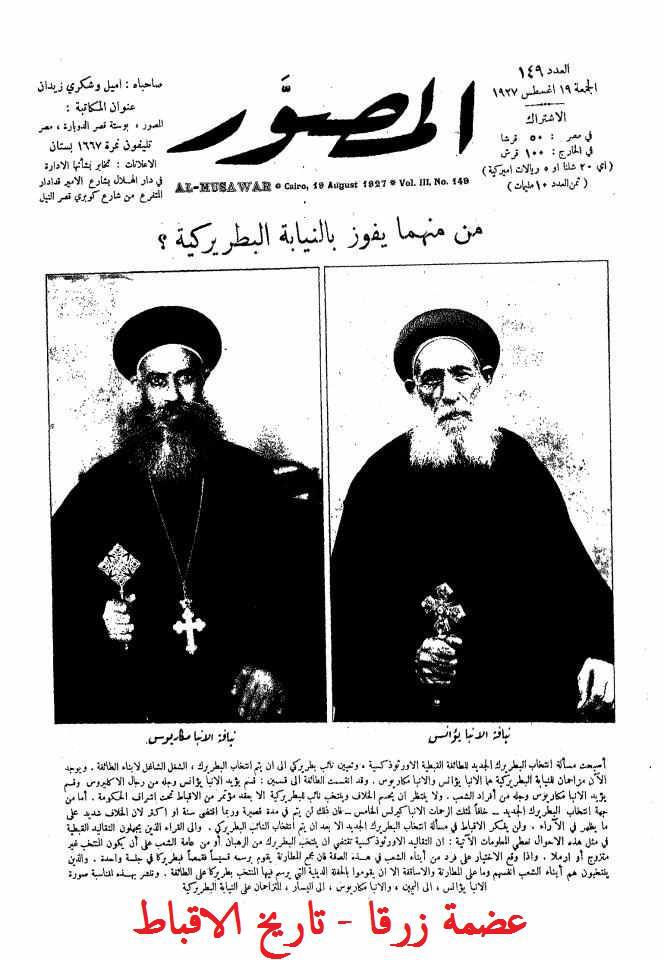
The 1927 Coptic Papal Election saw the bishop of a diocese elected Pope for the first time, rather than a monk or layman. This began a short phase of Coptic history where some actually campaigned to be elected pope. After a bitter and painful experience, the habit of choosing those who are unwilling to be Pope returned with the election of Pope Kyrollos VI in 1959.
One of the criticisms of the Orthodox Churches that is often raised is that it has a rigid hierarchical and even patriarchal structure, a hierarchy of patriarchs, bishops, priests and deacons who run everything in the church, while Protestant structures are more democratic, more ‘congregation-friendly’. As you will have no doubt guessed by now, I am going to disagree with this assessment.
To understand the Orthodox Church hierarchy we need to go right back to its origins, the years of ‘training’ that the Apostles of Christ underwent under His wise supervision. Over and over Jesus taught the Apostles that they were not rulers or masters in the worldly sense employed by any other organisation. An example will serve to illustrate this point:
The hierarchy of the Orthodox Church is not a hierarchy of authority and power, but of humble, self-sacrificial service. If we listen to our clergy it is not because we fear their wrath, but because we respect the gift of the Holy Spirit to which they have humbly submitted themselves. If we treat them with respect it is because they prostrate themselves daily to wash our feet, heal our wounds and straighten our path. I do not know how I can say this any more clearly: leadership in the Orthodox Church is not about power or authority or popularity or wealth. It is a kind of death for the leader. He must put himself willingly and joyfully to death each day out of love for his Master Christ and for his Master’s children. That is one reason why our priesthood wears black, to remind them and us of that daily death.
To be a Christian today is not to invent something new. It is rather to be a part of something that you share with many billions of others who have lived in times and places as diverse as the Late Classical Roman Empire, medieval China and modern Gabon. They have been short and tall, fat and skinny, rich and poor, powerful and oppressed, slaves and free, old and young, male and female. Yet all of this huge mass of humanity is united by one transcendent belief: that Jesus Christ, the incarnate Son of God, saved us from our sins.
It has not always been easy to hold this faith. Often, to be a Christian has meant to suffer taunts and jibes at the least, a painful death at worst. The courage and utter dedication to the truth of the Christian Gospel of those who came before is profoundly inspiring, and gives today’s Christian a background or heritage against which to measure her own practice of the Christian way. The Coptic Church, like many others, has preserved the stories of those heroes of the past in books like the Synaxarium (read during the liturgy) and the Antiphonarium (read during the Midnight Praise). She has preserved their stories in beautiful icons, which are said not be painted, but ‘written’, since they are created chiefly to tell a story and communicate important theological truths about the meaning and purpose of human life in the light of the Christian message of divine love. We sing praises to these saints, celebrate special days to remember and honour their lives and sacrifices, and name our children after them in the hope that they will emulate some of their virtues. These are heroes worthy of the title, for their victories and achievements were not just in some passing arena of human endeavour, but in the arena of eternal life. Their crown is not a fading wreath of leaves, but a state of heavenly existence in the light of their loving Creator.
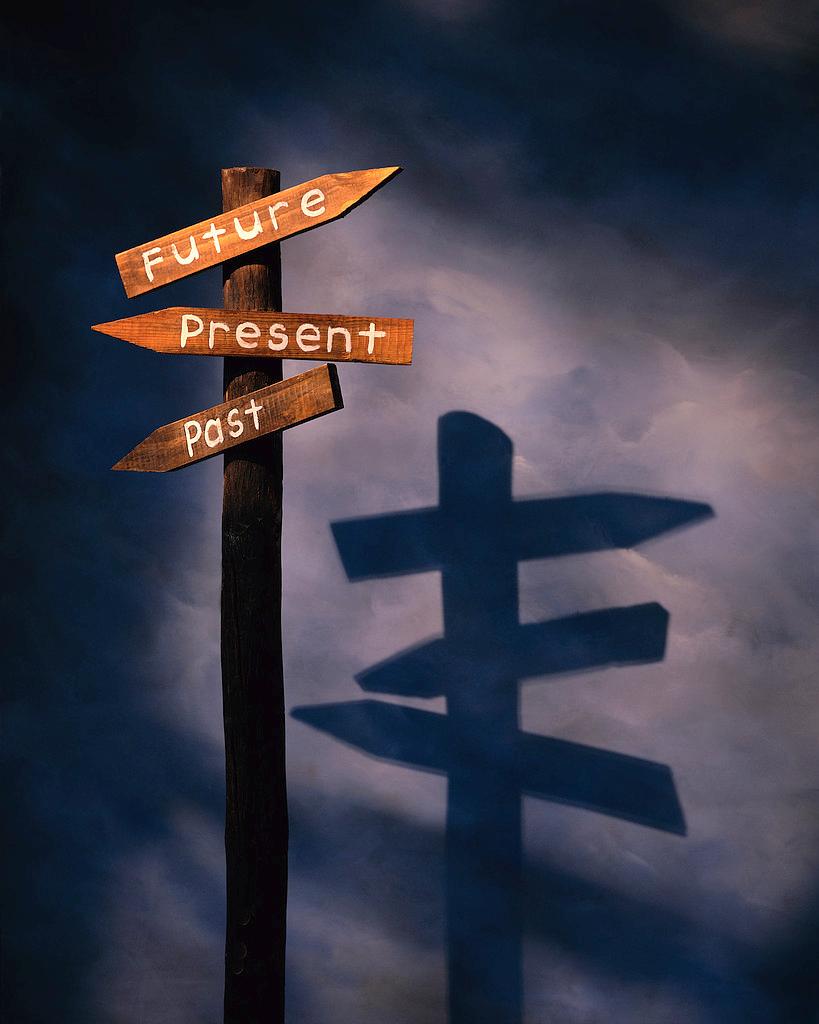
Christianity is first and foremost about love, about losing the ego, the self, by offering it up as a sacrifice of love for God and for others. “No one is saved alone” goes the old desert adage, but “Our life or death rests with our brother”. Continue reading “Being Orthodox 8: Connecting Past, Present and Future”
St Ignatius of Antioch who lived and wrote in the first century AD and was a disciple of St John the Beloved.
In the post on Tradition, I mentioned that the Orthodox (and Roman Catholics) derive their particular Christian tradition from the most ancient sources, and therefore from those sources closest to Christ. They strive to preserve a Tradition that has been faithfully passed down from generation to generation for nearly two thousand years. We know that this transmission has been relatively free of major change because we can go back to the writings of those who lived in the first centuries and compare. Where we find significant differences, we are dedicated to reviving the ancient tradition and eradicating the changes, wherever that is possible and necessary (we would not for example, insist that everyone learn to speak Greek because that is the language of the New Testament!)
Of course, Protestants aim to practice pure, ancient Christianity too, but they go about it in a very different way. For the Protestant, the catchcry is sola scriptura, ‘scripture alone!’ And of course, they are quite right in thinking that the Bible is the closest of sources to Christ Himself that we have available – historically speaking at least, although we would say we get even closer to Christ in the Eucharist, for example. But sola scriptura has problems as a basis for Christianity. For one, like the core Christian Creed we saw in the last post, the Bible must be interpreted. Apostolic and non-Apostolic Christians do not disagree about the authority of the Bible. What they disagree about is how interpret the Bible.
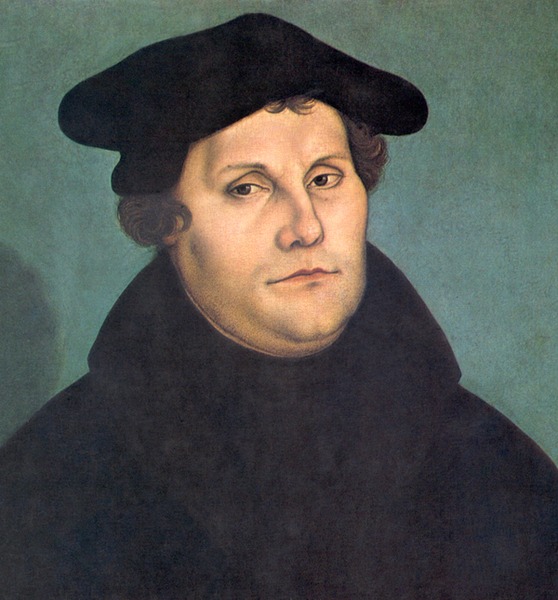
Martin Luther, father of the Protestant Reformation, considered the Epistle of James to be an ‘epistle of straw’ because of its insistence on works together with faith.
One of the things that divides Christianity in the West into Roman Catholic and Protestant branches is the disagreement about what it takes to make it into heaven. The Catholics insist that both faith and works are necessary. It is not enough just to believe in God, but you have to also do good deeds to prove the sincerity of that faith. Here they often cite the Letter of St James in the Bible, a letter that Protestant pioneer Martin Luther disparaged as being nothing more than a “letter of straw”. What is more, say the Catholics, sacraments are necessary. We must be baptised and confirmed, absolved of our sins in Confession and united with Christ in the Eucharist. Again, there is no shortage of Biblical references for this.
In reply, the Protestants accuse the Catholics of being too narrow, of substituting the inventions of men for the commands of God, and of course they too have plenty of Bible verses to back up their position. “Believe and you will be saved”, they say, and that is all there is to the matter. If you only believe in your heart that Jesus Christ is Lord, and proclaim it with your lips, you have won your place in heaven already, and, many of them add, can never again lose it, no matter what. Sola fidei (faith alone!) is the Protestant catchcry. It is an approach that has simplicity to recommend it, and makes the path to heaven seem so much easier than all that stuff Catholics insist you have to do all your life.
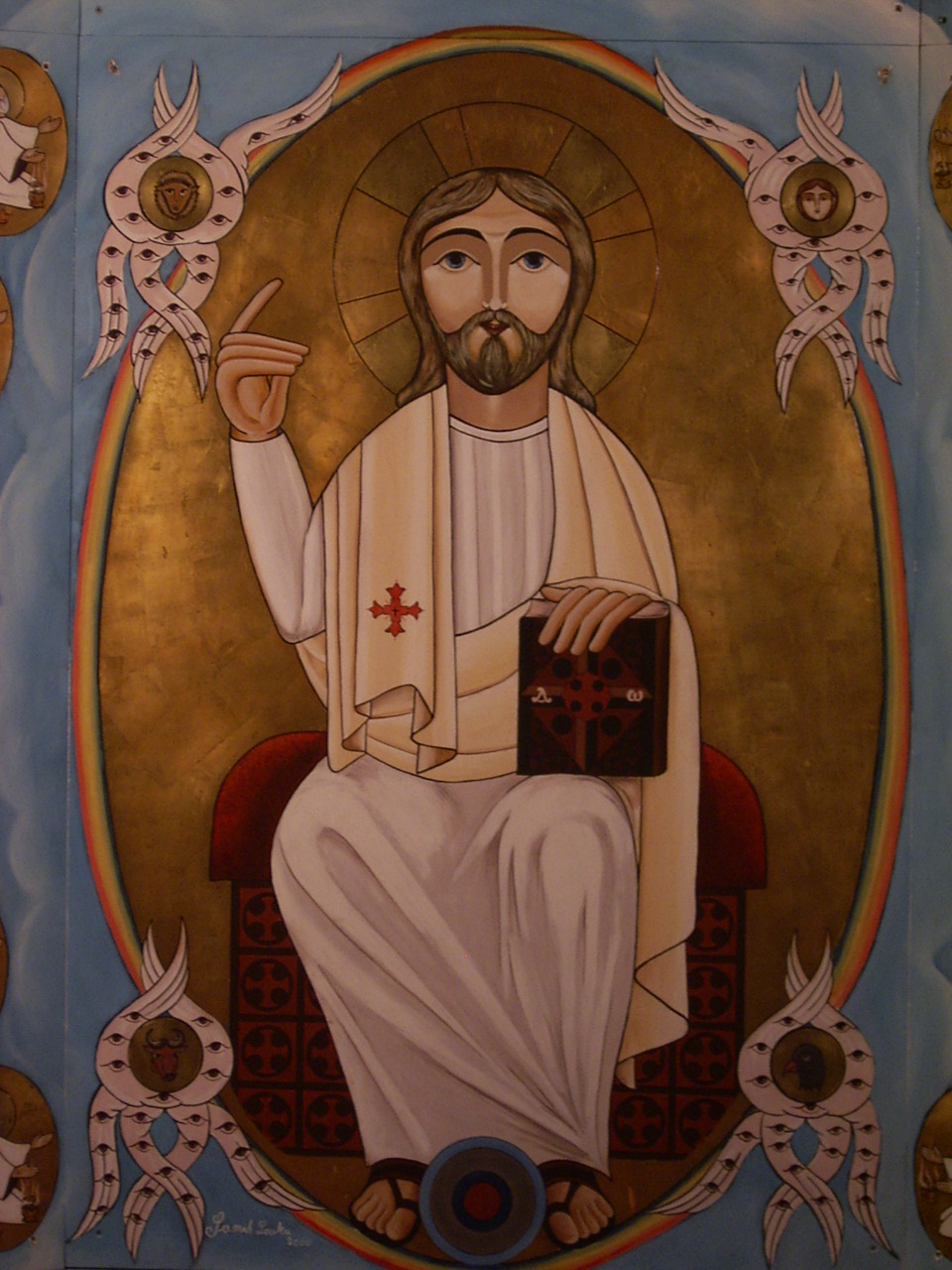
Every Coptic Church has an icon of Christ the Pantocrator, Christ victorious on the Throne of Heaven, at the very centre of the front of the Church building. This is an architectural expression of the spiritual principle of the centrality of Christ in our lives as individuals and as a community.
Protestant Christians often emphasise very strongly the importance of a personal relationship with God, so strongly in fact that in some Coptic circles you can be labelled a closet Protestant if you speak too much about a personal relationship with God. I believe such criticism sadly misreads the Apostolic Tradition. If we examine that Tradition we will find quite to the contrary, everything depends on this personal relationship with Christ. However, if the Orthodox see it as equally important if not more so compared to the Protestants, there are also differences in the nature of that personal relationship, differences that stem from our understanding of God.
But first let us illustrate the central role that personal relationship with Christ plays in the Orthodox Christian life. For the Orthodox Christian, the whole life of Christ is crucial. It is not just that Christ died for us on the Cross, but that He took our human nature in the first place. By doing so, by being one of us, He sanctified and blessed all humanity. He shared our sorrows and our joys, struggled as we do against evil and sin and weakness, became in fact, like us “in everything, save sin alone” (Liturgy of St Gregory). St Athanasius put it thus: “He took what is ours, and gave us what is His”. This exchange forms the basis of our personal relationship with Christ. The closest relationships are those in which there is complete sharing. All that we have, we give to Christ: our joys and victories; our sorrows and failures; our strengths and weaknesses; the little and the large; the important and the trivial; in fact, all that we have, all that are and all that we say and do, we offer constantly, repeatedly to Christ, keeping nothing back from Him, keeping nothing for ourselves alone. There is no nook or cranny of our existence we hold back. And He Himself gave all of Himself that is possible. His love, peace and joy, His truth and wisdom, His power and majesty, His forgiveness and mercy, His hope and faith and much more besides – all this He gave to humanity and to each one of us individually through His incarnation as one of us, and His life, death and resurrection.
The only thing He could not give us is the essence of divinity. The world was made through the Logos, Christ, but He could not grant us to be creators of the world. Instead, He gave us a small reflection of creatorship in that we can make new human beings through the Mystery of marriage, or participate in the creation of a new person through the Mystery of baptism. In Christ, we share with God al that we are and he shares with us all that we can bear of all that He is. Orthodoxy falls down in amazed gratitude before this astonishing act of love and incomprehensible generosity. We do not just appreciate it with our minds, for relationships are more than merely intellectual. We live it with our hearts, souls and bodies.
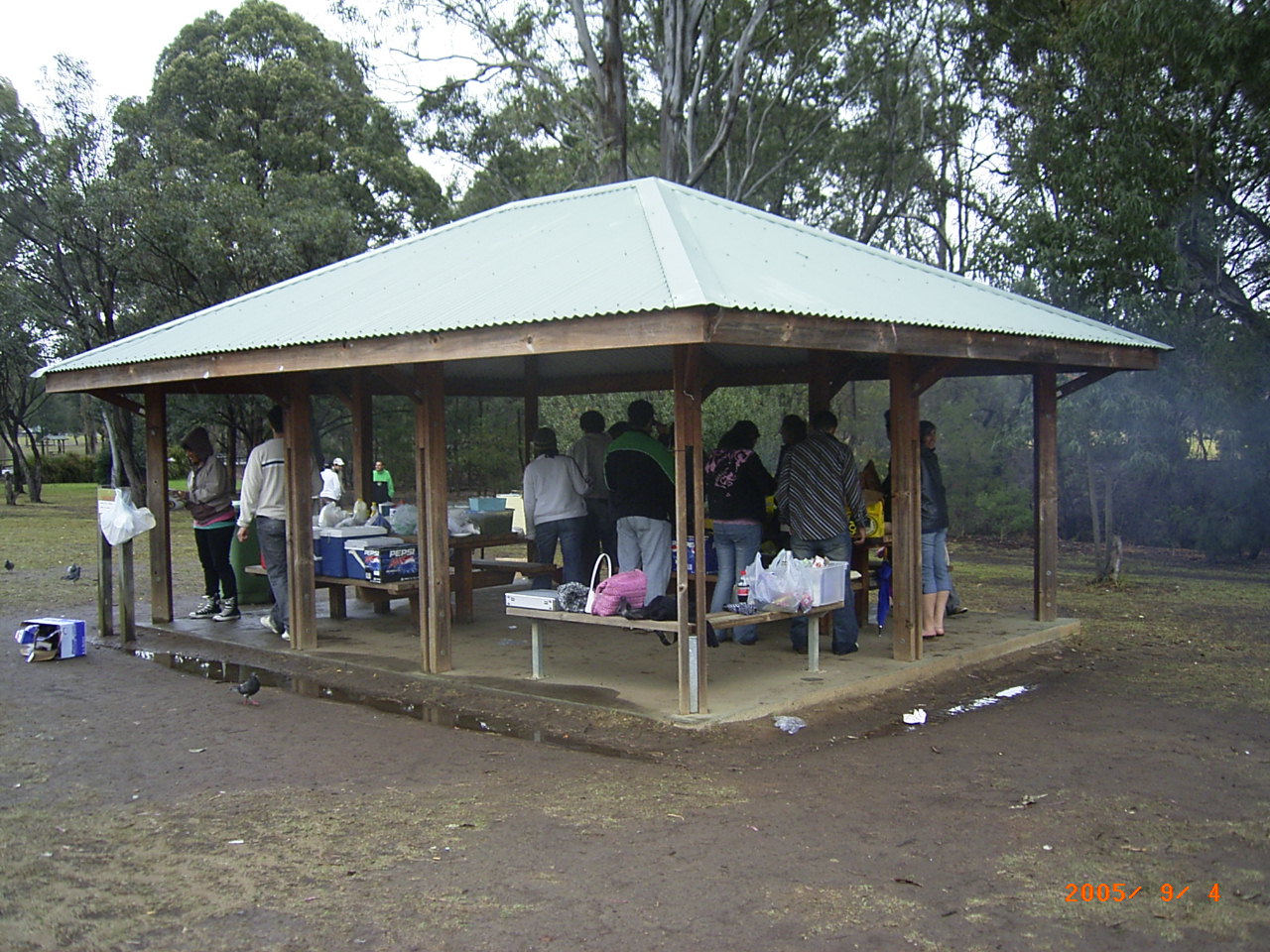
The barbecue is a fine Australian tradition that brings people together. Traditions give structure to our lives.
To understand anything it often helps to know its history, to explore the factors that made it what it is. I wrote recently to make the point that every religious community must necessarily follow some sort of tradition, whether that tradition be derived from the Apostles, or the ancient Fathers and Mothers of the Church of the first centuries, or St Thomas Aquinas, or Martin Luther or John Calvin, or even L. Ron Hubbard. The difference between the different denominations is not whether or not they are traditional, but which tradition they follow. Of course, a Church may be either more or less faithful to its original tradition, and to be sure, Protestants tend to be more comfortable with changing their traditions than Orthodox or Catholics.
What do we mean by ‘tradition’? And which tradition characterises the Orthodox Christian Church? We mean here a faith, worldview and way of life that defines who we are and directs all that we do. Orthodox tradition has its roots in the life and teachings of Christ Himself, and is a long unbroken chain passed down faithfully through the millennia in an unbroken line. It includes the things we believe, most succinctly summarised in the Nicene-Constantinopolitan Creed that we often recite when we pray formal prayers. It includes the interpretations of that Creed expounded by the leading lights of the early Church who studied and wrote and taught in the generations after the Apostles and received their faith either directly or indirectly from them. It includes the Books of the Bible, both Old and New Testaments, including the Deuterocanonical Books, and preferably in the Septuagint Translation which was the version used by Christ, His Apostles and the ancient Fathers.