That is a very big claim, but it really is not an exaggeration. I’ll show you some of the evidence that backs it up below.
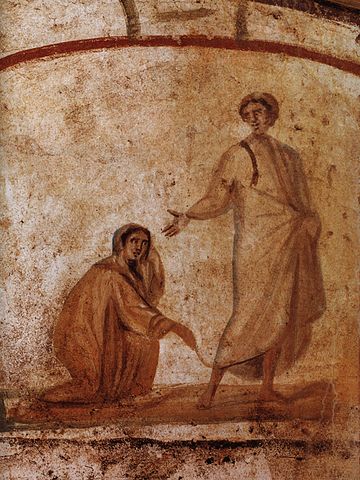
Today, we simply take it for granted that men and women are of equal value and equal ability, and we build our modern Western societies around that understanding. Women have the same rights in law as men, inherit equal shares with their brothers, have (at least in theory) the same access to education and careers, and so on. What most people don’t realise is that as a matter of history, it was, by and large, Christ and Christianity that made this possible. To put it somewhat simply, before Christ, women were not considered equal to men or treated as equal to men. The teaching and example of Christ are the foundation upon which equality of the genders came about. To claim that without Christ, women would still be unequal today would be speculative (equality might have come about some other way). But the claim that equality actually came about in history because of Christ is on pretty strong ground. Long before ‘feminism’ became A Thing, Christianity was turning the world upside down and revolutionising how we all think of women. Here, I am not engaging in the modern debates over the role of women in society and in Church. I am just pointing some very important facts of history—in very broad strokes (there’s a lot of detail and nuance that won’t fit in a blog post)—that are often neglected in such debates.
I wonder if there is not a very pagan foundation to the way some Christians think about God. There is, of course, the whole “transactional” relationship between humans and God, the idea that God is chiefly of interest to me in terms of what He can give me, what He can protect me from, and what He can inflict upon me, and that I must deal with Him wisely so as to placate and please Him and therefore maximise my benefit from Him. I addressed that topic in a recent post.
What I am thinking of here is the pagan idea of polytheism—many gods; and the tribal competition that goes on within such a world view—my god is better than your god. By and large, in the pagan world, the existence of many gods was taken for granted. Worshippers of one god did not consider the god of their neighbours to be non-existent, but to be inferior. And should one’s own god turn out to be the inferior one, then the prudent course of action is to switch allegiance to the more powerful god (thus maximising one’s benefits).
Doesn’t this worldview lie behind certain strands of Christian thought in some circles today?
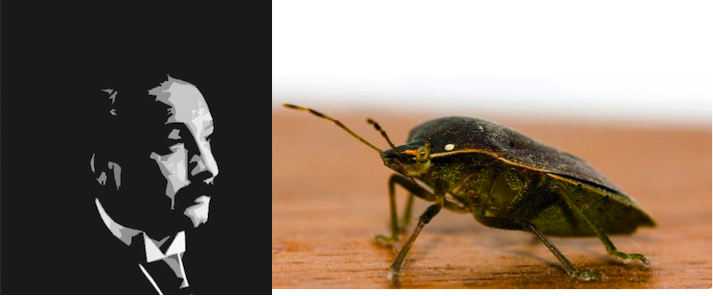
Albert Einstein explains his General Theory of Relativity to Cuthbert the cockroach (see text to make sense of this).
The question of how the Mysteries (sacraments) ‘work’ is necessarily and closely related to the question of the nature of God. If we want to know something about the work of the Holy Spirit, then we need first to know something about the Holy Spirit Himself. But can we ever really understand God? In the West, the Enlightenment was a time when the human mind seemed unstoppable. So many ancient questions were finally resolved, so many dark corners that seemed for centuries to be impenetrable had the light of human intellect flood into them, that it seemed that there was nothing we could not understand. Including perhaps, even God. It is a characteristic of modern Western theology that it sometimes seeks to explain what we of the East accept as inexplicable. Not just unexplained, mind you – in the sense that we just don’t know enough, but one day we might – but genuinely and forever beyond the reach of our human understanding.
But not all the great minds of the Enlightenment were so confident. Seventeenth century French philosopher Rene Descartes famously applied the ‘method of doubt’ to everything in his world and concluded that we cannot be certain that anything truly exists except ourselves (thus was born his famous phrase, cogito ergo sum, roughly translated, “I think, therefore, I am”). While most people rightly consider Descartes’ scepticism impractical, it is important for anyone who really cares about truth to be cautious about what they accept as truth.
In modern times, belief in God has been questioned for many reasons. One of these reasons is that theologians can sometimes overstep the mark and say things about God with far too much certainty. The pattern oft repeated in the West goes something like this: “God is X, Y and Z” becomes doctrine. But when thoughtful people apply careful sincere thought to the doctrine, they find serious holes in it. So they reject the doctrine of God being X, Y and Z, and the concept of a God along with it, since those who should know God best, the theologians, seem to have an indefensible concept of God. For a thoughtful Christian who has come to this point, the result is one of three things: either she will insist on holding on to a doctrine of God that she knows is indefensible; or she will lose interest in theology altogether; or she will lose her faith in the existence of God altogether.
Eastern and Western Christians agree that sin separates humanity from God and that Christ reversed that separation. But what is sin, and what did Christ do to reverse it? That is where they disagree. This blog looks at the Differences in the understanding of sin, salvation, punishment, heaven and hell between East and West and between the ancient and modern.
How does the Eastern understanding of Christian salvation differ from that of the West? Before we begin to examine this question, there are two important things to note. The first is that in such a short piece of writing I am going to have to over simplify things horribly. Please do not take what I have written as the whole story or anything near it. If you are interested in getting a fuller picture, I will provide some further reading at the end. The other thing to note is that all Christians adhere and accept the basic statement of the Christian faith, as summarised in a Creed. In fact, the way we decide whether a church is truly Christian or not is whether they adhere to this kind of creed. The version of the ancient Christian creed the Orthodox Churches prefer is the Nicene-Constantinopolitan Creed, the one we recite in every liturgy and many other formal prayers. Other Churches have creeds with slight variations on this one, but the variations are not really relevant to the discussion at hand.
But if we all hold to much the same creed, we do not all interpret it in the same way. Apparently, there is no official statement made by an ecumenical council on how the section about salvation in the basic Christian creed is to be interpreted, which is one reason why there are so many interpretations around. Starting with St Augustine, and moving through St Anselm and St Thomas Aquinas in the Middle Ages, the Catholic Church moved towards a view of salvation that cast God as something like a feudal lord dealing with his peasants or serfs. The ignorant and disobedient serfs withdrew their rightful service from their Lord, thus dishonouring or offending Him, and deserving punishment for this crime. “The honour taken away must be repaid, or punishment must follow” (St Anselm, Cur Deus Homo, book 1, chapter 8). Christ came to offer the service that we failed to offer, thus restoring the honour of the Father and averting the need for us to be punished for our crime. The Protestant Reformation sought to interpret the Christian creed afresh, using only the Bible as a guide. But of course, the Bible too needs to be interpreted, and again, there can be many differing interpretations. Martin Luther and particularly John Calvin took St Anselm’s satisfaction model to the more extreme penal substitution model where Christ did not satisfy the wounded honour of the Father and offer the service humanity owed on their behalf, but actually took the punishment of their sin on their behalf. They also introduced a full legal vocabulary and explicitly legal precepts to describe what happens in salvation.
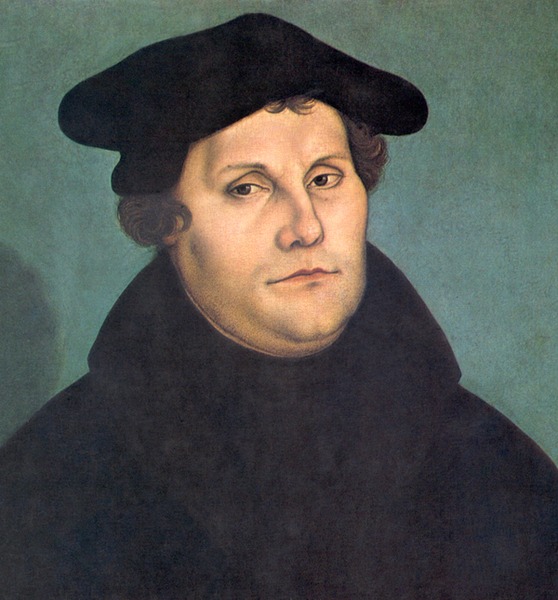
Martin Luther, father of the Protestant Reformation, considered the Epistle of James to be an ‘epistle of straw’ because of its insistence on works together with faith.
One of the things that divides Christianity in the West into Roman Catholic and Protestant branches is the disagreement about what it takes to make it into heaven. The Catholics insist that both faith and works are necessary. It is not enough just to believe in God, but you have to also do good deeds to prove the sincerity of that faith. Here they often cite the Letter of St James in the Bible, a letter that Protestant pioneer Martin Luther disparaged as being nothing more than a “letter of straw”. What is more, say the Catholics, sacraments are necessary. We must be baptised and confirmed, absolved of our sins in Confession and united with Christ in the Eucharist. Again, there is no shortage of Biblical references for this.
In reply, the Protestants accuse the Catholics of being too narrow, of substituting the inventions of men for the commands of God, and of course they too have plenty of Bible verses to back up their position. “Believe and you will be saved”, they say, and that is all there is to the matter. If you only believe in your heart that Jesus Christ is Lord, and proclaim it with your lips, you have won your place in heaven already, and, many of them add, can never again lose it, no matter what. Sola fidei (faith alone!) is the Protestant catchcry. It is an approach that has simplicity to recommend it, and makes the path to heaven seem so much easier than all that stuff Catholics insist you have to do all your life.
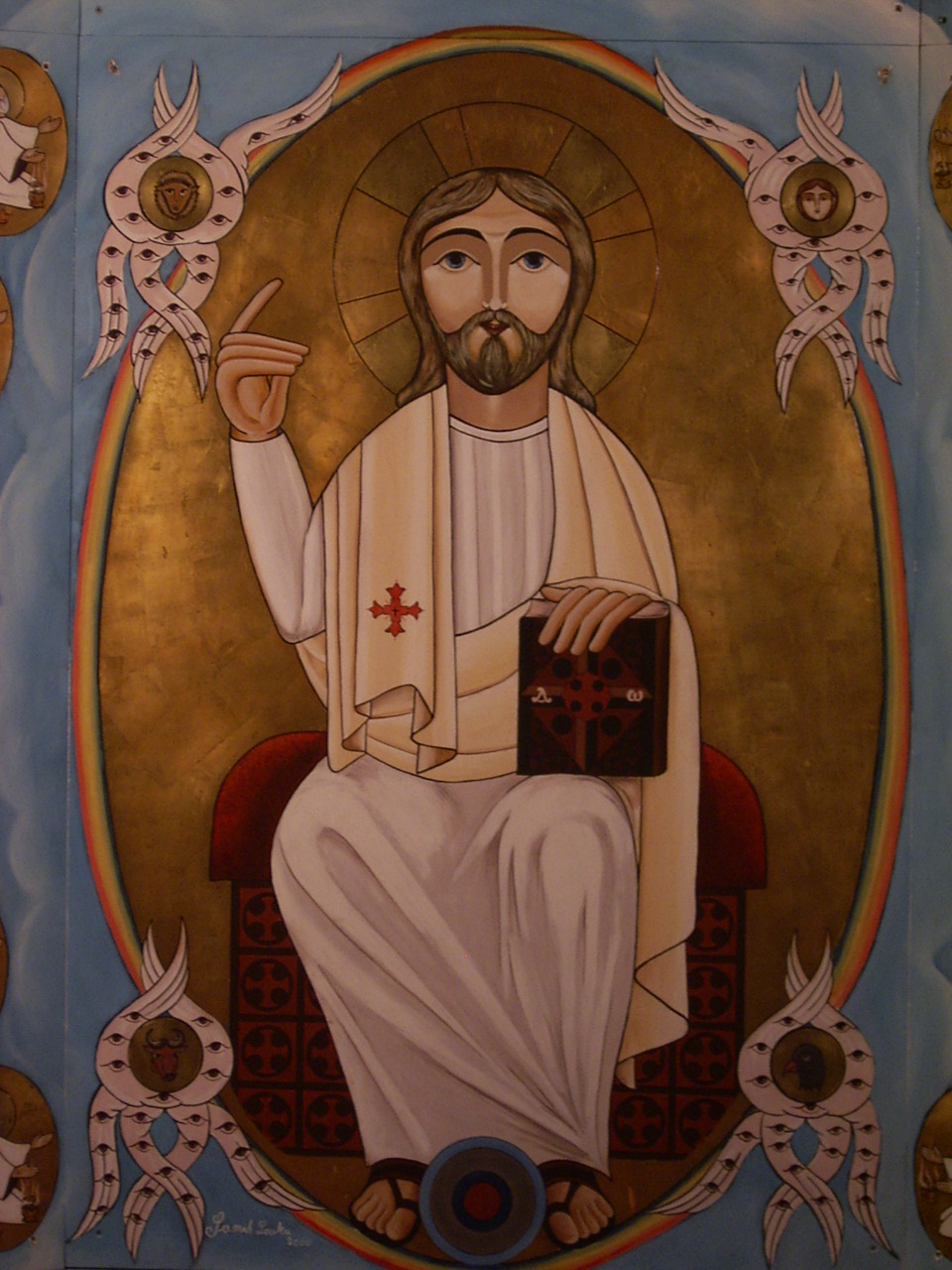
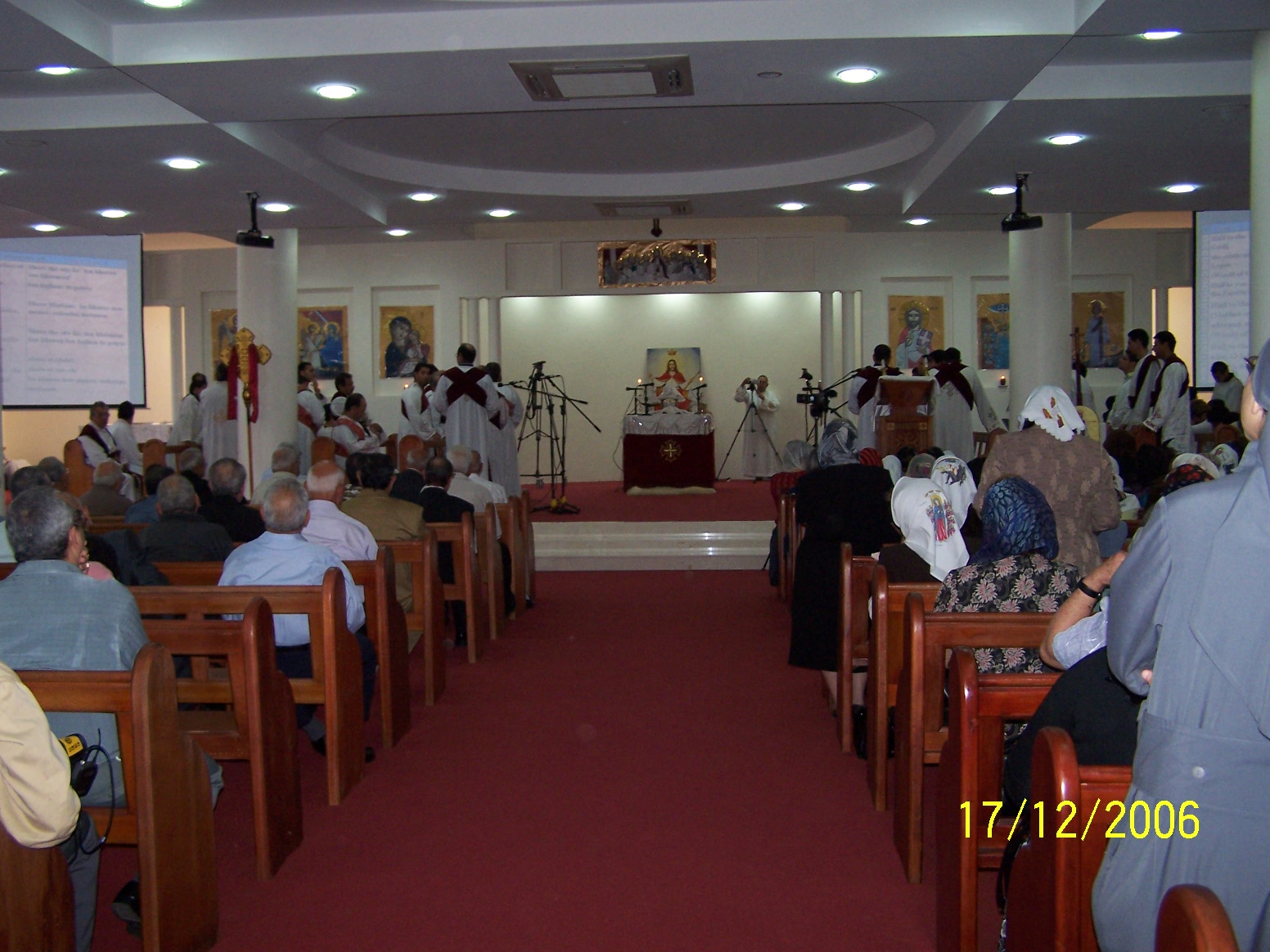
Every Coptic Church has an icon of Christ the Pantocrator, Christ victorious on the Throne of Heaven, at the very centre of the front of the Church building. This is an architectural expression of the spiritual principle of the centrality of Christ in our lives as individuals and as a community.
Protestant Christians often emphasise very strongly the importance of a personal relationship with God, so strongly in fact that in some Coptic circles you can be labelled a closet Protestant if you speak too much about a personal relationship with God. I believe such criticism sadly misreads the Apostolic Tradition. If we examine that Tradition we will find quite to the contrary, everything depends on this personal relationship with Christ. However, if the Orthodox see it as equally important if not more so compared to the Protestants, there are also differences in the nature of that personal relationship, differences that stem from our understanding of God.
But first let us illustrate the central role that personal relationship with Christ plays in the Orthodox Christian life. For the Orthodox Christian, the whole life of Christ is crucial. It is not just that Christ died for us on the Cross, but that He took our human nature in the first place. By doing so, by being one of us, He sanctified and blessed all humanity. He shared our sorrows and our joys, struggled as we do against evil and sin and weakness, became in fact, like us “in everything, save sin alone” (Liturgy of St Gregory). St Athanasius put it thus: “He took what is ours, and gave us what is His”. This exchange forms the basis of our personal relationship with Christ. The closest relationships are those in which there is complete sharing. All that we have, we give to Christ: our joys and victories; our sorrows and failures; our strengths and weaknesses; the little and the large; the important and the trivial; in fact, all that we have, all that are and all that we say and do, we offer constantly, repeatedly to Christ, keeping nothing back from Him, keeping nothing for ourselves alone. There is no nook or cranny of our existence we hold back. And He Himself gave all of Himself that is possible. His love, peace and joy, His truth and wisdom, His power and majesty, His forgiveness and mercy, His hope and faith and much more besides – all this He gave to humanity and to each one of us individually through His incarnation as one of us, and His life, death and resurrection.
The only thing He could not give us is the essence of divinity. The world was made through the Logos, Christ, but He could not grant us to be creators of the world. Instead, He gave us a small reflection of creatorship in that we can make new human beings through the Mystery of marriage, or participate in the creation of a new person through the Mystery of baptism. In Christ, we share with God al that we are and he shares with us all that we can bear of all that He is. Orthodoxy falls down in amazed gratitude before this astonishing act of love and incomprehensible generosity. We do not just appreciate it with our minds, for relationships are more than merely intellectual. We live it with our hearts, souls and bodies.
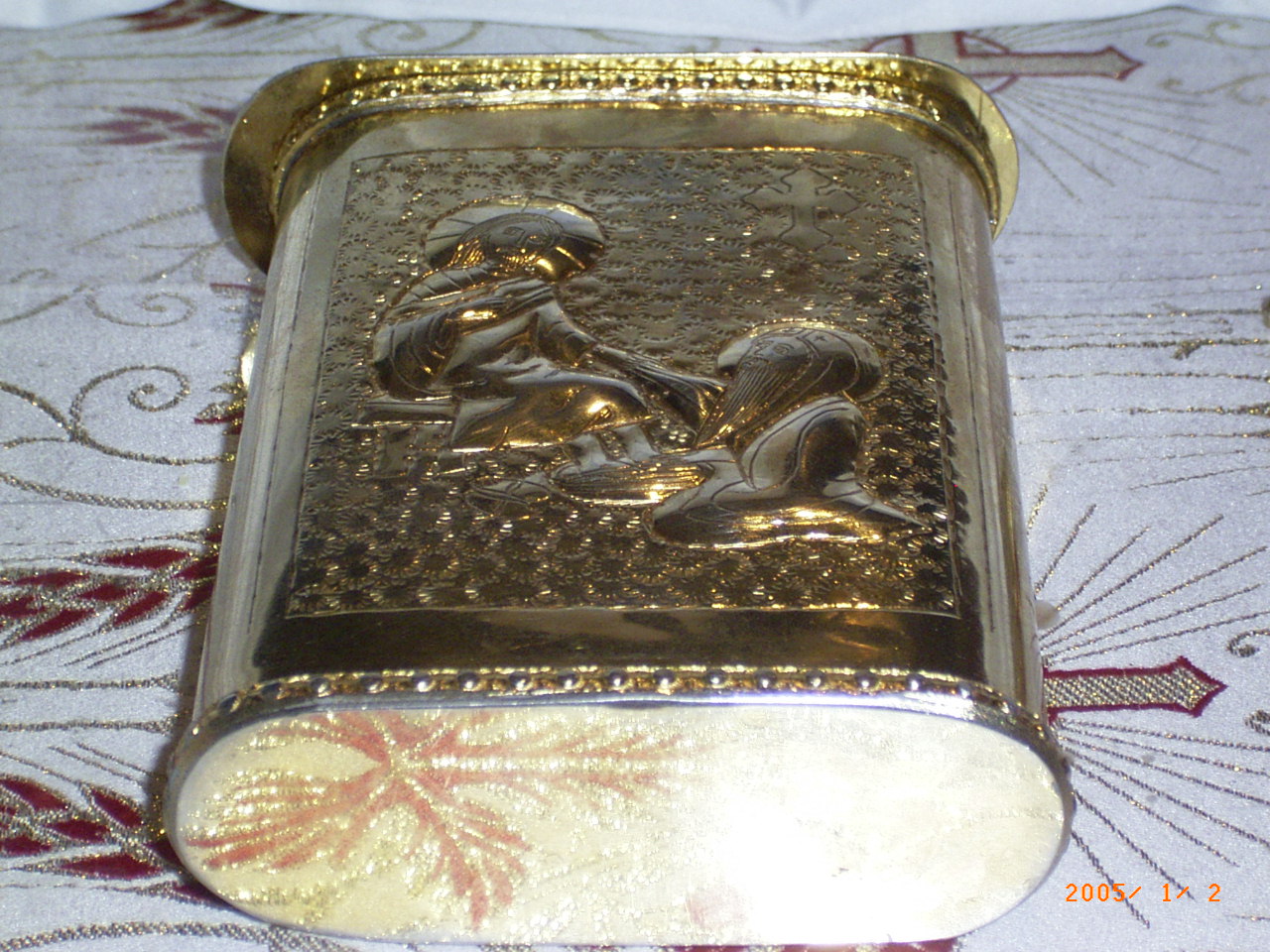
A gilt Bible – actually the Four Gospels and the Psalms – used in Coptic Churches as a physical, 3D icon of the Word of God.
You will notice that in the last post I listed the Bible as a subheading under the heading ‘Tradition’. I did this to emphasise the nature of role of the Bible in Orthodox (and Roman Catholic) Christianity, in contrast to its role in Protestant Christianity. Protestants mostly follow a doctrine named sola scriptura, ‘scripture alone!’ This doctrine developed historically as a reaction to the often misguided human inventions of the medieval Catholic Church in Europe that were commanded as though they came directly from God. Doctrines such as purgatory, indulgences, relic-worship and their abuses were (rightly) rejected by the reforming Protestants. But they took things too far, discarding not only the later additions, but also much of the ancient apostolic traditions as well. Having lost their confidence in the clergy and their laws, the reformers decided that each individual should read the Bible for himself or herself and build their faith on that Bible, and that Bible alone.
This is all good and well, until you realise that the Bible as we have it today did not come into existence until the fourth century AD. For the first three hundred years, Christians lived their Christian lives guided not by a single monolithic text, but by a living tradition, some of which was gradually recorded in that text. That’s right, Jesus didn’t hand out NKJV Study Bibles to His Apostles (with an inspirational message scribbled inside the cover) when He sent them out to preach the Gospel to the world. Does this mean that the early Christians were lost? The Protestant Reformation aimed to return to a simpler more authentic Christianity, yet one of the central tenets of their project, sola scriptura, was something that the first generations of Christians could not possibly have practiced!
The barbecue is a fine Australian tradition that brings people together. Traditions give structure to our lives.
To understand anything it often helps to know its history, to explore the factors that made it what it is. I wrote recently to make the point that every religious community must necessarily follow some sort of tradition, whether that tradition be derived from the Apostles, or the ancient Fathers and Mothers of the Church of the first centuries, or St Thomas Aquinas, or Martin Luther or John Calvin, or even L. Ron Hubbard. The difference between the different denominations is not whether or not they are traditional, but which tradition they follow. Of course, a Church may be either more or less faithful to its original tradition, and to be sure, Protestants tend to be more comfortable with changing their traditions than Orthodox or Catholics.
What do we mean by ‘tradition’? And which tradition characterises the Orthodox Christian Church? We mean here a faith, worldview and way of life that defines who we are and directs all that we do. Orthodox tradition has its roots in the life and teachings of Christ Himself, and is a long unbroken chain passed down faithfully through the millennia in an unbroken line. It includes the things we believe, most succinctly summarised in the Nicene-Constantinopolitan Creed that we often recite when we pray formal prayers. It includes the interpretations of that Creed expounded by the leading lights of the early Church who studied and wrote and taught in the generations after the Apostles and received their faith either directly or indirectly from them. It includes the Books of the Bible, both Old and New Testaments, including the Deuterocanonical Books, and preferably in the Septuagint Translation which was the version used by Christ, His Apostles and the ancient Fathers.
Celebrating the Eucharist is a tradition instituted by Christ Himself. It embodies the core faith and life of Christianity.
Some of my best friends are Protestant! I have engaged in innumerable fascinating discussions with Protestant friends over the decades on the differences and similarities between the two approaches to being Christian. One of the benefits claimed by some Protestants is that the Catholic and Orthodox Churches are “traditional” Churches while Protestant Churches are not. By this it is usually meant that the traditional Churches adhere to a body of beliefs and practices developed by human beings through the centuries while the non-traditional Churches are not limited by such constraints, and are therefore able to enact the Christian Gospel free of any merely human innovations. But is this really true?
Human nature is such that we cannot, like God, create anything ex nihilo, out of nothing. All we can do is take what is given to us and perhaps synthesise or modify it into something else. In this sense, all that we do is traditional. When we drive our cars on the left side of the road, when we wear clothes of particular fashion, when we follow certain healthy diets, when we use qwerty keyboards; all these are examples of traditions that we follow. If we didn’t, life would be impossible. Imagine if you could not depend on medical research to tell you what a healthy diet looks like, but had to work it all out on your own, right from scratch! Traditions allow us to get on with life, to progress in life, to build on the wisdom and experience of others rather than have to do it all ourselves from first principles. To be sure, it is often interesting to go back and read how a tradition came about, and thus understand why it is a good tradition to follow, and to be sure, some traditions occasionally need revision or even total reformation or replacement, but the idea of living your life according to a set of traditions is something we all do every day of our lives, and indeed, could not live the lives we now live without doing it.
So it is somewhat hard to believe that of all the things in the world of human beings, there is this one particular case, this one exception to the rule, Continue reading “Tradition and Denomination”
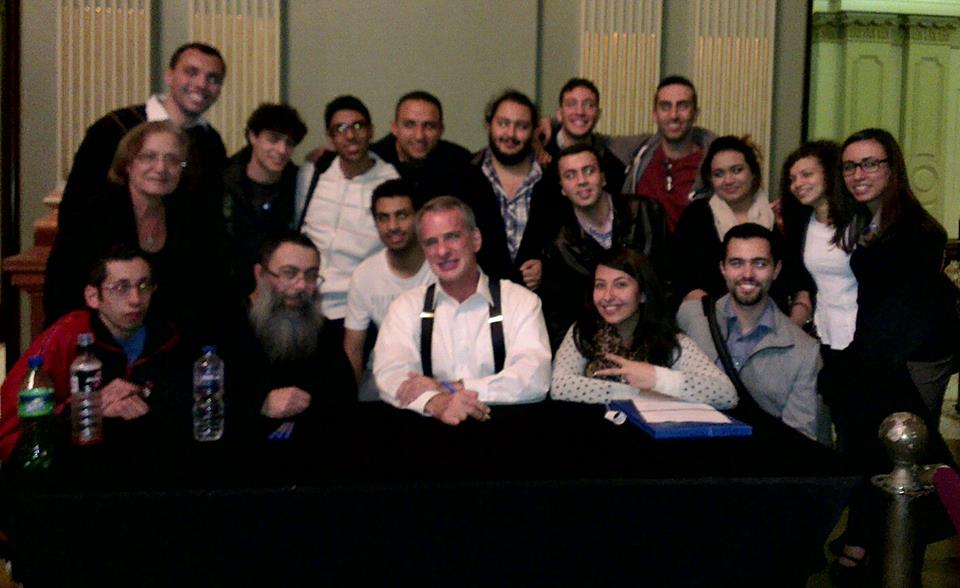
Coptic Apologetics Group meeting William Lane Craig in Sydney
I began to write a post on the situation in Egypt, or more specifically on the inspiring reaction of the Copts and the sensible Muslims to the troubles in Egypt, when I came across the following little essay. It was posted on Facebook by a Mary Sarkis, apparently a Copt, though I do not know her personally. The wonders of the modern age of the internet! I don’t think it needs much comment from me, for she says what I wanted to say so much more beautifully than I could have said it. As an aside, I came upon this lovely piece via a podcast by William Lane Craig, an American Christian philosopher and apologist. Our Apologetics Group had the privilege of meeting him and atheist Laurance Krauss after their recent public debate at Sydney Town Hall.
This message has really been on my heart so please take a minute to read!
IT WILL GO DOWN IN HISTORY the grace, love, self-control, and patriotism that Copts have demonstrated in this chapter of Egypt’s history. Persecution is not new to Copts (as is the case with many minorities), but I have never been more proud to be a Copt! Not because Copts are persecuted but because of the way Copts have responded and what I’ve seen of the reaction of Moslems to the behavior of Egypt’s Christians. When 50-70 churches, Christian schools/orphanages/ monasteries (some ancient) were attacked this last week, ALL eyes were on Copts to see their reaction. Moslem-Egyptian media figures / authors like Amr Adeeb, Ibrahim 3eesa, Youssef el Hussaini, Fatma Naoout, Tarek Heggy, to name a few, all testified to the Copts’ endurance and loyalty to their country regardless of the horrific abuses that they’ve suffered, not just now but throughout history. Here’s a sample quote from talk show host Youssef El Husseini… Continue reading “True Christianity in Action”